Transformation Systems
Structured environments where behavioural change is executed through controlled systems.

SYSTEM DEFINITION
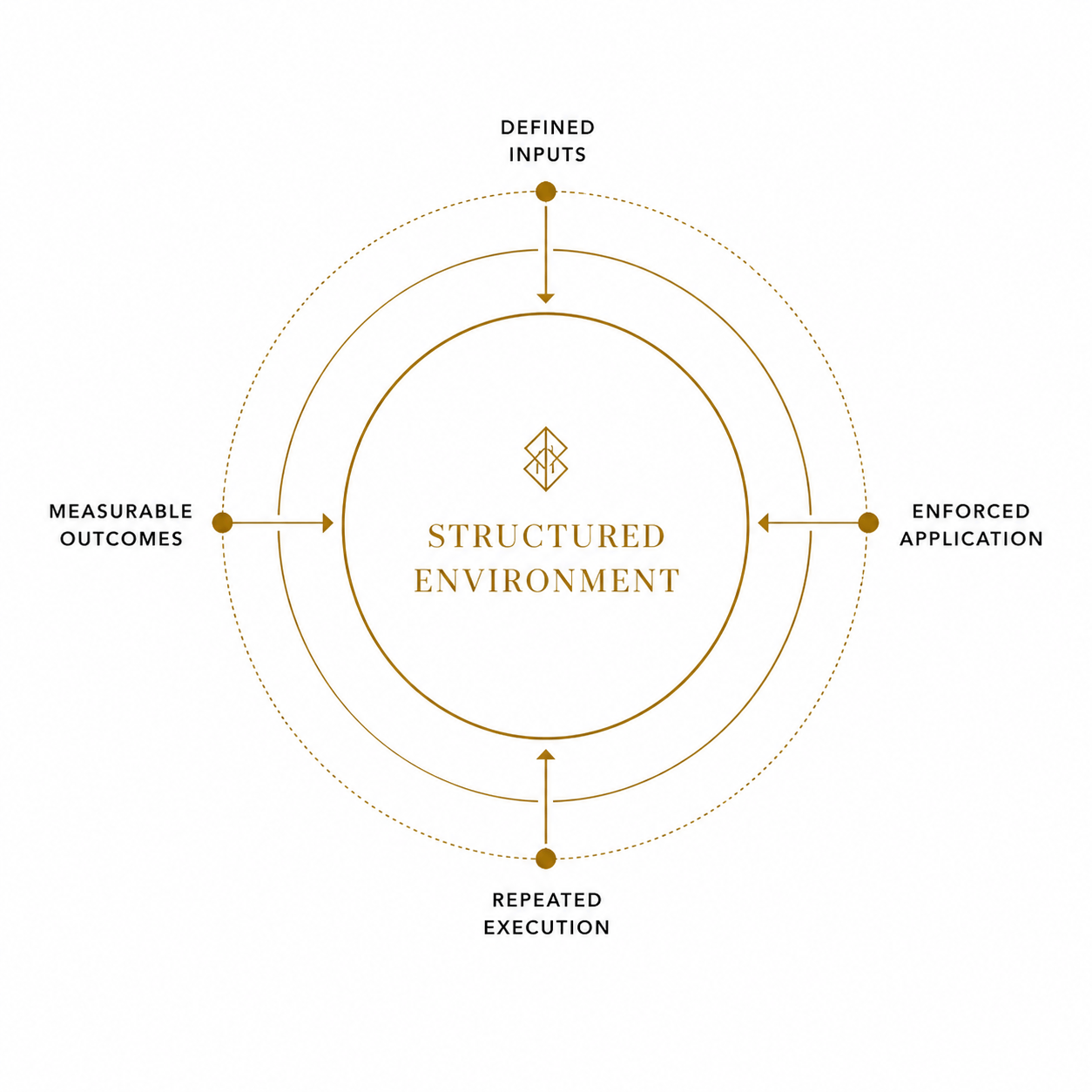
Transformation is executed inside structured environments.
Each system operates as a controlled framework where behaviour is guided through defined inputs, enforced application, and repeated execution cycles. The system determines how movement occurs, how decisions are made, and how outcomes are produced.
Entry begins at a fixed baseline. From that point, the system introduces directives that require immediate application within real conditions. Progress is governed through execution, ensuring alignment is established through action rather than exposure.
EXECUTION MODEL
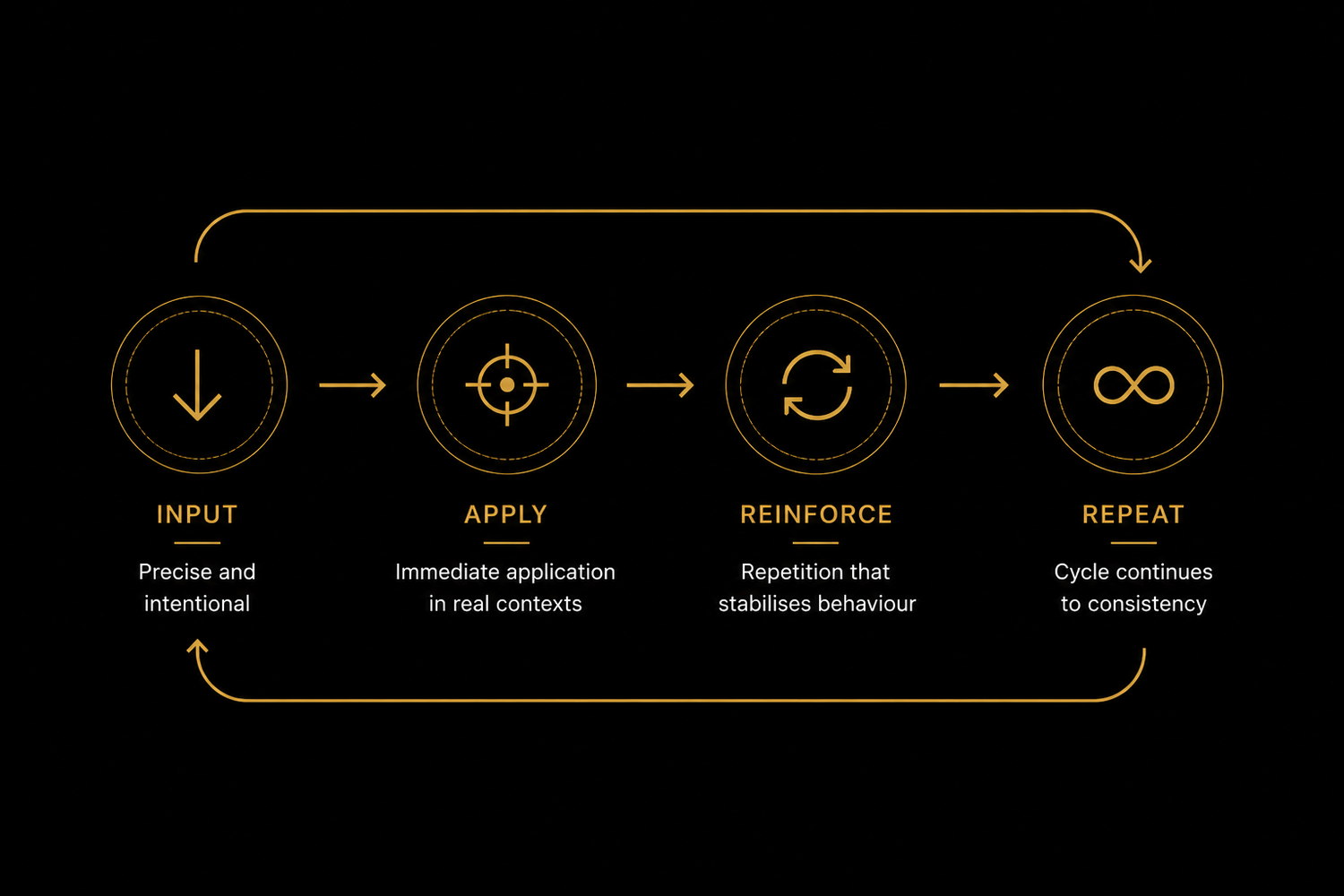
Every system follows a fixed execution sequence.
Every system follows a fixed execution sequence.
Input is introduced with precision. Application follows immediately. Reinforcement stabilises behaviour through repetition. The cycle continues until execution becomes consistent and self-sustaining.
Movement through the system is linked to demonstrated alignment. Completion is defined by behavioural stability.
SYSTEM STRUCTURE
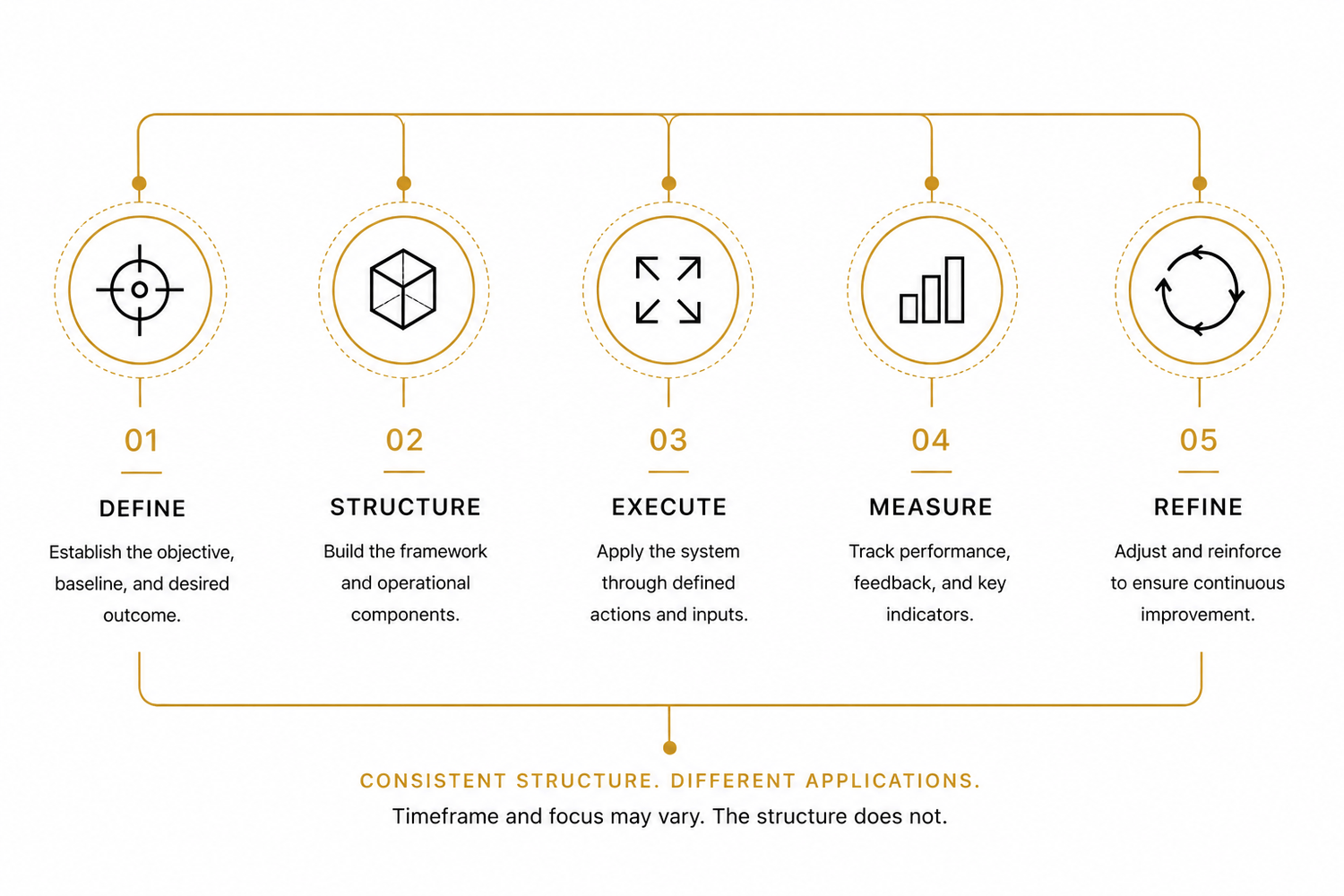
Short-cycle systems operate within compressed timeframes. These environments intensify focus and accelerate recalibration through strict execution demands.
Extended systems operate over longer durations where deeper restructuring is required. These environments allow patterns to stabilise across multiple conditions.
The structure remains consistent across all systems. Timeframe adjusts. Intensity scales.

APPLICATION ENVIRONMENT
Application occurs within real environments.
Each system integrates daily execution into existing conditions where behaviour can be observed, adjusted, and reinforced. This ensures that change is stabilised within lived contexts rather than isolated scenarios.
The system does not remove the individual from reality. It restructures how they operate within it.
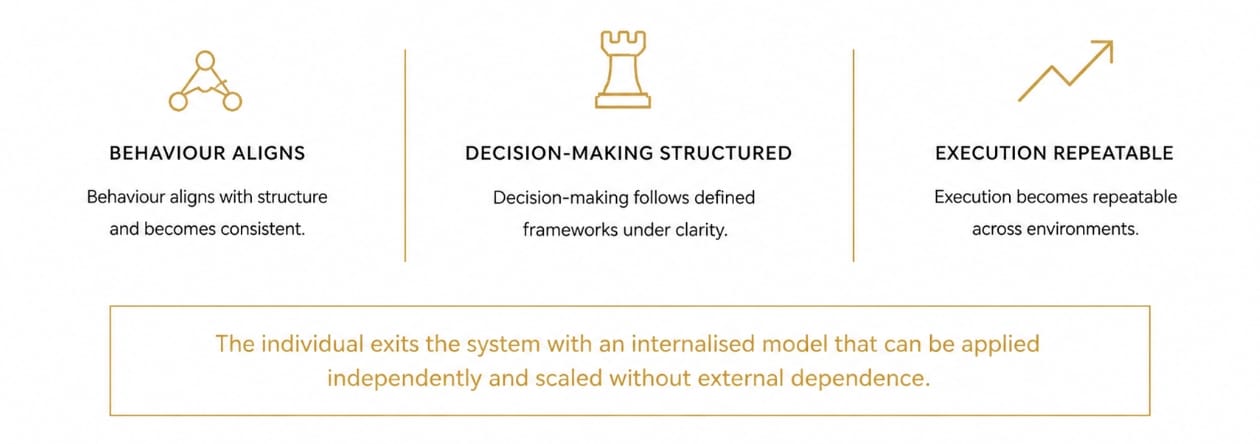
OUTCOME FRAMEWORK
Outcomes are expressed through three dimension.